
BC seniors' home renovation tax credit: 10% back, up to $1,000 a year
The BC seniors' home renovation tax credit refunds 10% of up to $10,000 a year in eligible renovation costs, so a household gets at most $1,000 per tax year. It covers only work that makes a home easier or safer to use for someone 65 or older or with a disability, and it's refundable.
By the Delwin Construction team Updated
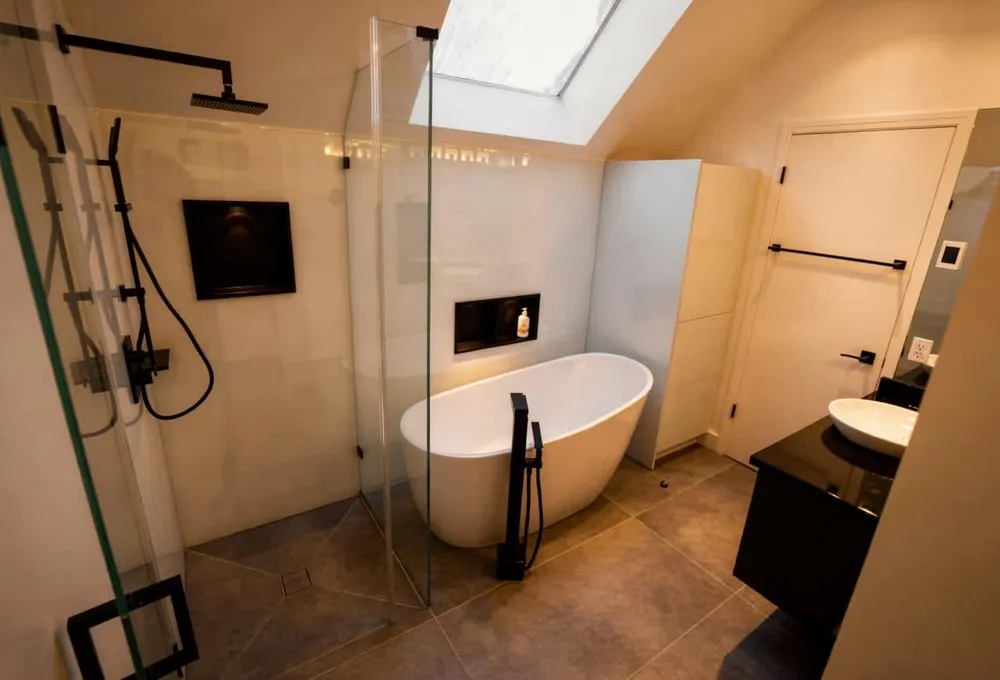
BC refunds 10% of up to $10,000 a year in accessibility renovations
The BC home renovation tax credit for seniors and persons with disabilities pays back 10% of eligible renovation costs, on up to $10,000 of costs a year. That caps the credit at $1,000 per tax year. It’s refundable: if the credit is more than the tax you owe, you get the difference as a refund.
You can claim it if you live in BC on the last day of the tax year. You must also be 65 or older or have a disability, or be a family member living with someone who is. The work must be to your principal residence. It must help that person by improving access to the home, making it easier to move and function inside, or reducing the risk of harm. Its main purpose can’t be to raise the home’s value.
The credit is set by Part 11 of BC’s Income Tax Act, so it works the same in Vancouver as anywhere else in the province. Several of the province’s examples are bathroom work: grab bars around the toilet, tub and shower, a hand-held shower on an adjustable rod, a wheel-in shower and a raised toilet. Our accessible bathroom renovations in Vancouver include walk-in showers in place of a tub.
Example: a walk-in shower conversion for a 70-year-old owner
Example only: an owner aged 70 replaces a bathtub with a wheel-in shower and grab bars in their principal residence; eligible receipts total $12,000 (an example input, not a Delwin price)
- Eligible expenses counted (cap) Receipts of $12,000, less government assistance for the same work ($0 in this example), capped at $10,000 on Schedule BC(S12) $10,000
- Credit rate A refundable credit: paid even if it is more than the tax you owe 10 percent
- Credit $10,000 × 10% = $1,000, which is also the most the credit pays in a tax year $1,000
- Where to claim Filed with your T1 income tax return Schedule BC(S12); Form BC479 line 60480
Result. The household gets $1,000 back as a refundable credit. The $2,000 over the cap gets nothing from this credit, but the federal home accessibility tax credit may cover the same work.
You, or a family member you live with, claim it on Schedule BC(S12)
The person who qualifies, or a family member who lives with them, claims the credit with their T1 income tax return. On Schedule BC(S12) you list each receipt: the date, the supplier or contractor, their GST/HST number and the amount paid. The total goes on line 60480 of Form BC479, the British Columbia credits form.
The form subtracts any “government assistance received or receivable” for those expenses before the $10,000 limit applies, so assistance toward the same work comes off first. The limit is shared by everyone in the home. Spouses, or a parent and an adult child living together, can split it as they agree, as long as their claims add up to no more than $10,000.
The federal home accessibility tax credit is a separate claim on your federal return, with its own limit and rules. The Canada Revenue Agency (CRA) says that credit isn’t reduced by provincial tax credits.
Planning this work? Book a free on-site consultation; the quote that follows sets out the pricing in detail.
The CRA can ask for receipts that show the work and who did it
The CRA can ask to see the receipts behind your claim, so each one should show what was done, who did it and what it cost. If a family member did the work, their receipts for labour and materials must show a GST/HST number.
The work also has to pass the purpose test. Painting an existing bedroom is general maintenance and doesn’t count, while the general renovation costs of adding a main-floor bedroom or bathroom so a senior can reach one can count. In the same way, replacing carpet doesn’t qualify, but flooring that makes a walker or wheelchair easier to use does.
Claim it for the year you get the invoice, not the year you pay it
The credit runs by tax year. An expense counts as paid on the earlier of the day you paid it or the day it became payable. So an invoice you receive in December and pay in January is claimed for the year you received it. The $10,000 limit and the $1,000 maximum apply to each tax year.
Age is checked on the last day of the tax year, so a person who turns 65 by December 31 qualifies for work done that year. If you sell one home and renovate the next in the same year, expenses on both can count, still within the one $10,000 limit.
Without receipts, you have nothing to show if you’re asked
Don’t send receipts with your return, but keep them. The schedule says to keep them in case you’re asked for them later. The province says you must keep documents that support the claim, including receipts from suppliers and contractors. If they’re gone when the request comes, nothing supports the claim.
The credit doesn’t change the permit rules either. Whether a bathroom or entrance renovation needs a City of Vancouver permit depends on the work itself; see which renovations need a City of Vancouver permit. Outside the City of Vancouver, each Metro Vancouver municipality sets its own permit rules.
Appliances, heating systems and routine repairs don’t qualify
The province lists what doesn’t count: all appliances, heating or air conditioning systems, general maintenance such as plumbing or electrical repairs, and regular flooring. Window installation, insulation replacement, roof repairs, landscaping, redecorating, home security equipment and services such as housekeeping or home care are out as well. The province’s FAQ confirms that a new furnace or heating system on the first floor doesn’t qualify.
On a do-it-yourself job, qualifying materials count but your own labour doesn’t: you can’t put a value on your time and claim it. Leave electrical and gas work to licensed trades: Technical Safety BC licenses the contractors who do it.
Some people can’t claim even when the work qualifies. A landlord renting a home to a senior can’t, and neither can an attendant, a nursing home or a co-op housing corporation claiming for a resident. A condo owner can claim their share of an eligible common-area renovation, once the strata corporation tells them that share in writing.
Questions people ask
Who qualifies for the BC seniors' renovation tax credit?
Seniors 65 or older and people with a disability qualify, and so do family members who live with them. You must be a BC resident on the last day of the tax year. Anyone who qualifies for the federal disability tax credit counts as having a disability. The work must be to your principal residence, the home you mainly live in, which can include a non-seasonal mobile home.
What renovations qualify for the BC seniors' home renovation tax credit?
Permanent work that improves access, mobility or safety for the senior or person with a disability. The province's examples include grab bars around the toilet, tub and shower, a walk-in tub or a wheel-in shower, and a raised toilet. Widened doors, lever handles, non-slip flooring, lowered counters, ramps and stair lifts are on the list too. Modular versions of permanent fixtures, such as a modular ramp, count too.
Can I claim the credit for renovating my parents' home?
Yes, if your parents are seniors and their home is also your principal residence, because you live there with them. You, your parents or all of you can claim, but together you can't count more than $10,000 of eligible expenses in a tax year. Agree how to split it; if you can't, the allocation is made for you.
Is the BC seniors' renovation tax credit income tested?
No. The province says the credit isn't reduced by income above a set amount. A household with a high income gets the same 10% on up to $10,000 of eligible costs. Because it's refundable, a senior who owes no BC income tax still gets it, paid as a refund. You can also claim it for expenses that qualify for the medical expense tax credit.
Sources
- Province of British Columbia: Home renovation tax credit for seniors and persons with disabilities
- Province of British Columbia: Home renovation tax credit for seniors and persons with disabilities, frequently asked questions
- Canada Revenue Agency: 5010-S12 Schedule BC(S12), British Columbia Home Renovation Tax Credit for Seniors and Persons with Disabilities