
Home accessibility tax credit: up to $20,000 of renovations a year
The home accessibility tax credit covers up to $20,000 a year of renovation costs for a person 65 or older or eligible for the disability tax credit. At the 2026 federal rate of 14%, it cuts federal tax by at most $2,800, and it's non-refundable, so it can't pay out more than you owe.
By the Delwin Construction team Updated
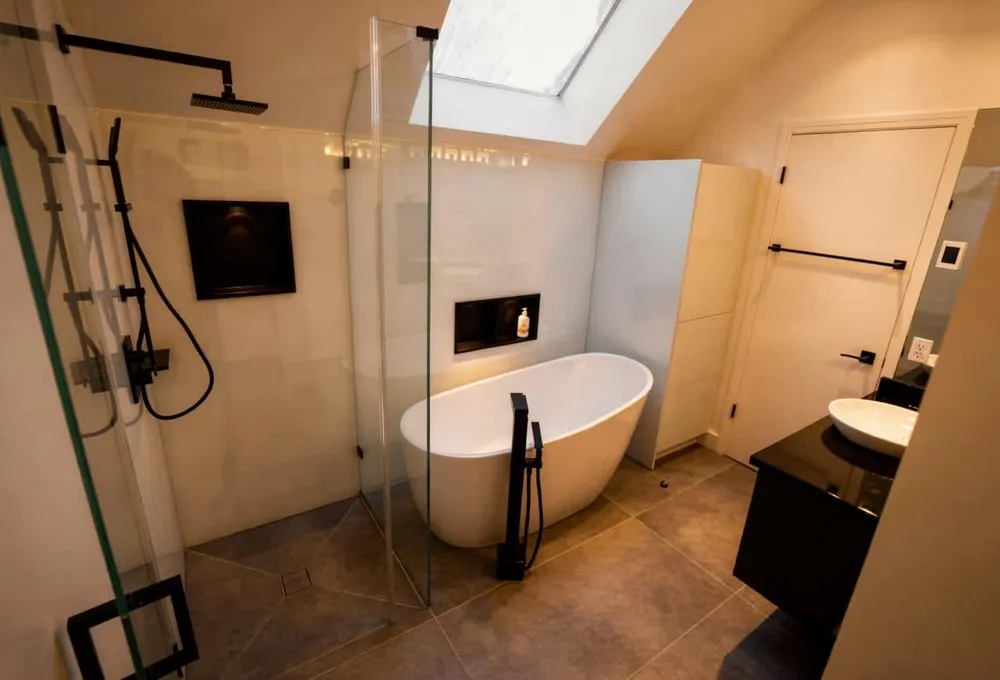
The federal credit covers up to $20,000 of eligible costs a year
The home accessibility tax credit (HATC) is a federal, non-refundable credit for renovations that make a home more accessible and safer. A qualifying individual can claim up to $20,000 of eligible expenses a year. When two qualifying individuals share a home, $20,000 is the total for that home.
The Income Tax Act sets the credit as a rate times your eligible expenses, up to that $20,000. The rate is what the Act calls the “appropriate percentage”, the lowest federal tax rate for the year: 14% for 2026.
The credit is federal, so it works the same in Vancouver as anywhere in Canada. BC runs its own refundable credit for similar work, the BC seniors’ home renovation tax credit. The Canada Revenue Agency (CRA) says the federal credit isn’t reduced by government assistance, including grants or tax credits from a province.
Example: the federal credit on a $20,000 accessible bathroom (2026)
Example only: eligible expenses of $20,000 for a qualifying individual in 2026 (example input)
- Expense limit per qualifying individual All $20,000 of the example's expenses fit under the limit $20,000
- Rate: the lowest federal tax rate for 2026 The Income Tax Act applies the lowest federal rate for the year to the eligible expenses 14 percent
- Credit $20,000 × 14% = $2,800. This is our arithmetic from the published limit and rate, not a CRA figure $2,800
- Claim line Worked out first in the line 31285 chart of the Federal Worksheet line 31285
Result. A non-refundable federal credit of up to $2,800 for 2026; it reduces tax owing and does not pay out beyond it.
The person 65 or older, or a relative who supports them, claims it
The qualifying individual is someone 65 or older at the end of the year, or eligible for the disability tax credit at any time in the year. They can claim the credit, and so can an eligible individual. That’s their spouse or common-law partner, or a relative who claims, or could claim, certain dependant or caregiver amounts for them.
The work must be on an eligible dwelling. That’s a home in Canada the qualifying individual owns and ordinarily lives in. It can also be a home an eligible individual owns and shares with them, if the qualifying individual doesn’t own and live in another home that year. A condo or co-op owner’s share of eligible common-area work counts too.
To claim, complete the chart for line 31285 on the Federal Worksheet, then enter the result on line 31285 of your federal return. Several people can share the $20,000; if they can’t agree on the split, the CRA decides.
Planning an accessible bathroom? Book a free on-site consultation for a quote with clear, detailed pricing.
The CRA looks for permanent work that improves access or safety
A qualifying renovation must be lasting and become part of the home, including its land. It has to help the qualifying individual get into the home, move around or function inside it, or face less risk of harm there. Something you buy that won’t become a permanent part of the home generally isn’t eligible.
The test is about what the work does for the person, not which room it’s in. In a bathroom, ask that of each item: does a walk-in shower or a grab bar help this person get in, move around or avoid a fall? Our bathroom renovations in Vancouver include walk-in showers and glass shower doors.
Paid work by a professional, such as an electrician, plumber, carpenter or architect, generally counts. Permits required for the work count as eligible expenses under the Act, so City permit fees go in the claim. What Vancouver building permits cost shows how those fees add up. Other Metro Vancouver municipalities set their own permit fees and rules.
Expenses count in the tax year the work is done
Eligible expenses are those made or incurred during the year, for work performed and goods acquired in that tax year. The $20,000 limit applies to each year. If the qualifying individual moves during the year, the total for every home they had that year still can’t pass $20,000.
A renovation that needs a City of Vancouver permit can start later than planned, which can move the work into the next tax year. How long renovation permits take in Vancouver shows the City’s own wait times.
Without itemized receipts, the expense isn’t supported
You don’t send receipts with your return, but you keep them in case the CRA asks to see them later. Each expense must be backed by documents such as agreements, invoices and receipts.
The CRA spells out what those documents should show:
- the vendor or contractor, their business address and, if they have one, their GST/HST registration number;
- what was bought or what work was done, with the dates and the address where the work took place;
- the amount, and proof it was paid in full, such as an invoice showing it paid, a credit card slip or a cancelled cheque;
- for condo or co-op common areas, a signed statement from the corporation showing the cost and your share.
Appliances, routine repairs and medical-expense claims don’t count
The Act and the CRA list what doesn’t count. Property that can be used apart from the renovation is out, and so are routine or recurring repairs and maintenance, household appliances and electronic home-entertainment devices. Services such as housekeeping, security monitoring or gardening don’t count either. Financing costs and work done mainly to increase or keep up the home’s value are out as well.
Goods or services from a relative don’t count unless that person is registered for GST/HST. If part of the home earns business or rental income, only the personal-use areas count, and shared items such as a ramp are split between the two uses.
From the 2026 tax year, an expense included in a medical expense claim can’t also go on this credit. The CRA’s line 31285 page, written for 2025, still says both can be claimed; the Act was changed for 2026 and later years.
Questions people ask
Who counts as a qualifying individual for the home accessibility tax credit?
Someone who is 65 or older at the end of the year, or who is eligible for the disability tax credit at any time in the year. A spouse or common-law partner can claim for them as an eligible individual. So can a relative, such as a child, sibling or grandchild, who claims or could claim dependant or caregiver amounts for them.
Is the home accessibility tax credit refundable?
No. It's non-refundable, so it lowers the federal tax you owe and stops there; nothing is paid out as a refund. The claim can be split between the qualifying individual and eligible individuals, such as a spouse, and the CRA sets the split if they can't agree. BC's seniors' renovation credit works differently: it's refundable.
Can I claim the cost of doing the work myself?
You can claim what you spend, not what your time is worth. On a job you do yourself, building materials, fixtures, equipment rentals, building plans and permits can count, but the value of your labour or tools can't. Work by a relative counts only if they're registered for GST/HST. Paid work by a professional, such as a plumber, electrician or carpenter, generally counts.
Can the same expense count as a medical expense and for the home accessibility credit?
Not from the 2026 tax year. Up to 2025, an expense that qualified for both credits could be claimed under both. For 2026 and later years, the Income Tax Act leaves out any expense included in a medical expense claim, so each expense goes on one credit or the other. Ask a tax professional which suits your situation.
Sources
- Canada Revenue Agency: Home accessibility expenses (line 31285)
- Justice Laws: Income Tax Act, section 118.041 (home accessibility tax credit)
- Canada Revenue Agency: Current year tax rates and income brackets (2026)
- Canada Revenue Agency: Budget 2025, CRA information on select measures (Home Accessibility Tax Credit)