
Electrical permits in Vancouver: when a homeowner can take one out
An electrical permit in Vancouver comes from the City, not Technical Safety BC, and a licensed electrical contractor applies unless you qualify as a homeowner. The homeowner route needs a detached house you own and live in, no suite or rented space, a service not above 200 A, and you doing all the work.
By the Delwin Construction team Updated
In Vancouver, the City issues electrical permits
Technical Safety BC names the City of Vancouver as one of the local governments that issue their own electrical permits. So a Vancouver electrical permit comes from the City, under its Electrical By-law, while Technical Safety BC keeps contractor licensing and the certification of qualified people. Homes elsewhere in Metro Vancouver aren’t covered by this page.
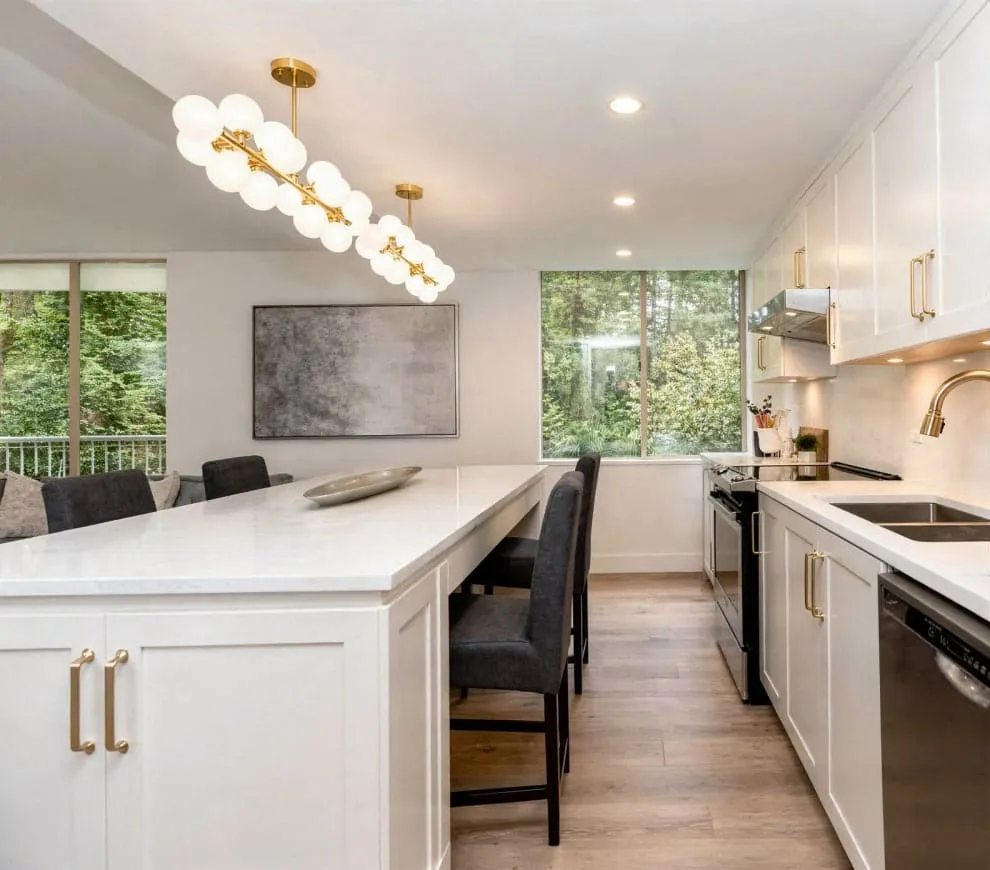
A renovation that moves existing electrical lines needs a permit. In a kitchen renovation, shifting outlets or lighting to suit a new layout moves existing wiring, so it falls under that rule. Who may take out the permit depends on the six conditions below.
Homeowner electrical permit in Vancouver: all six must be true
- The home is a detached single-family house The City's homeowner route is written for a detached single-family home and nothing else.
- You own the house and live in it An owner who lives somewhere else doesn't qualify.
- The house has no secondary suite A house with a suite goes to a licensed electrical contractor.
- No part of the house is rented Any rented part of the home rules the homeowner permit out.
- The electrical service is not above 200 A A bigger service means a licensed electrical contractor takes out the permit.
- You do all of the electrical work yourself The City's conditions also say you are knowledgeable about the work you plan to do.
A licensed contractor applies, and the fee follows the cost of the work
If any item on the checklist fails, the permit goes to an electrical contractor licensed by Technical Safety BC. Our guide to checking a contractor’s licence in BC shows where that licence can be looked up.
The City prices the permit by the estimated cost of the electrical work, not by the room or the number of outlets. For work over $1,000 and up to $10,000, the 2026 fee is $243, plus $79.70 for every $1,000, or part of $1,000, above the first $1,000. Jobs outside that range fall on other lines of the same schedule. Our guide to City of Vancouver building permit fees works one electrical permit through line by line.
Rewiring as part of a full home renovation? Book a free on-site consultation to plan the whole scope first.
The City screens homeowner applicants and Technical Safety BC licenses contractors
Two regulators split the checking. Technical Safety BC lists Vancouver among the local governments that issue their own permits and perform their own electrical assessments. The City decides whether a homeowner qualifies, against the conditions in the checklist, including that the owner is knowledgeable about the work. For a contractor, the check is the trade licence: Technical Safety BC keeps a Find a Licensed Contractor database with each contractor’s compliance history.
Advertising is part of it too. Anyone advertising regulated electrical work has to display a licence number, so a quote or ad without one is worth questioning before you sign.
Electrical updates in a simple renovation can be permitted within a week
A simple home renovation valued under $250,000 can get its permits in a week through the City’s Residential Renovation Fast Track. Updating electrical work is one of its eligible scopes. Structural alterations, additions and cases of work done without a permit aren’t eligible for it.
Whichever route the application takes, the permit comes before the wiring changes.
Unpermitted electrical work leaves the owner with the bill
Electrical work that needed a permit and went ahead without one brings the City’s work-without-permit rules into play. Work halts until a permit is processed, the penalty is typically double the original permit fee, and finished work may have to be removed. A contractor’s word that no permit was needed doesn’t shift the cost: the homeowner pays it.
Suites, rentals, attached homes and big services rule out the homeowner route
The homeowner permit covers one kind of home. Any one of these sends the permit to a licensed electrical contractor. They are a secondary suite, a rented part, a service above 200 A, or a home that isn’t a detached house. Condos, townhouses and other attached homes fall outside it for that last reason.
If you plan to add a suite later, the homeowner route closes once the suite exists. Our guide to legal basement suites in Vancouver covers the permits a suite itself needs.
Questions people ask
Can I do my own electrical work in Vancouver?
Only under a City homeowner electrical permit, and only if every condition holds. The home must be a detached single-family house you own and live in, with no secondary suite and no rented part. Its service can't be above 200 A, and you do all the work yourself. If any of those fails, the permit and the work go to an electrical contractor licensed by Technical Safety BC.
Does Technical Safety BC issue electrical permits in Vancouver?
No. Vancouver is on Technical Safety BC's list of municipalities that run their own electrical and gas permits, so the application goes to the City. Technical Safety BC keeps its role in licensing contractors and certifying qualified people. So you check an electrical contractor's licence with Technical Safety BC but get the permit from the City.
How much does an electrical permit cost in Vancouver?
The fee follows the estimated cost of the electrical work. Under the City's 2026 fees, work over $1,000 and up to $10,000 costs $243, plus $79.70 for every $1,000, or part of $1,000, above the first $1,000. Jobs outside that range are priced on other lines of the same schedule, which the City set in its November 2025 fee report.
Sources
- City of Vancouver: Electrical permit
- Technical Safety BC: Jurisdiction
- Technical Safety BC: Home renovation safety
- City of Vancouver, Council report RTS 18094: 2026 Fee Increases for Rezoning, Development, Building, and Other Related Applications and Permits (Appendix A)
- City of Vancouver: When you need a permit